


Into the Light: A Conversation with Sofiane Sehili
Edoardo.Frezet.Cicloreporter
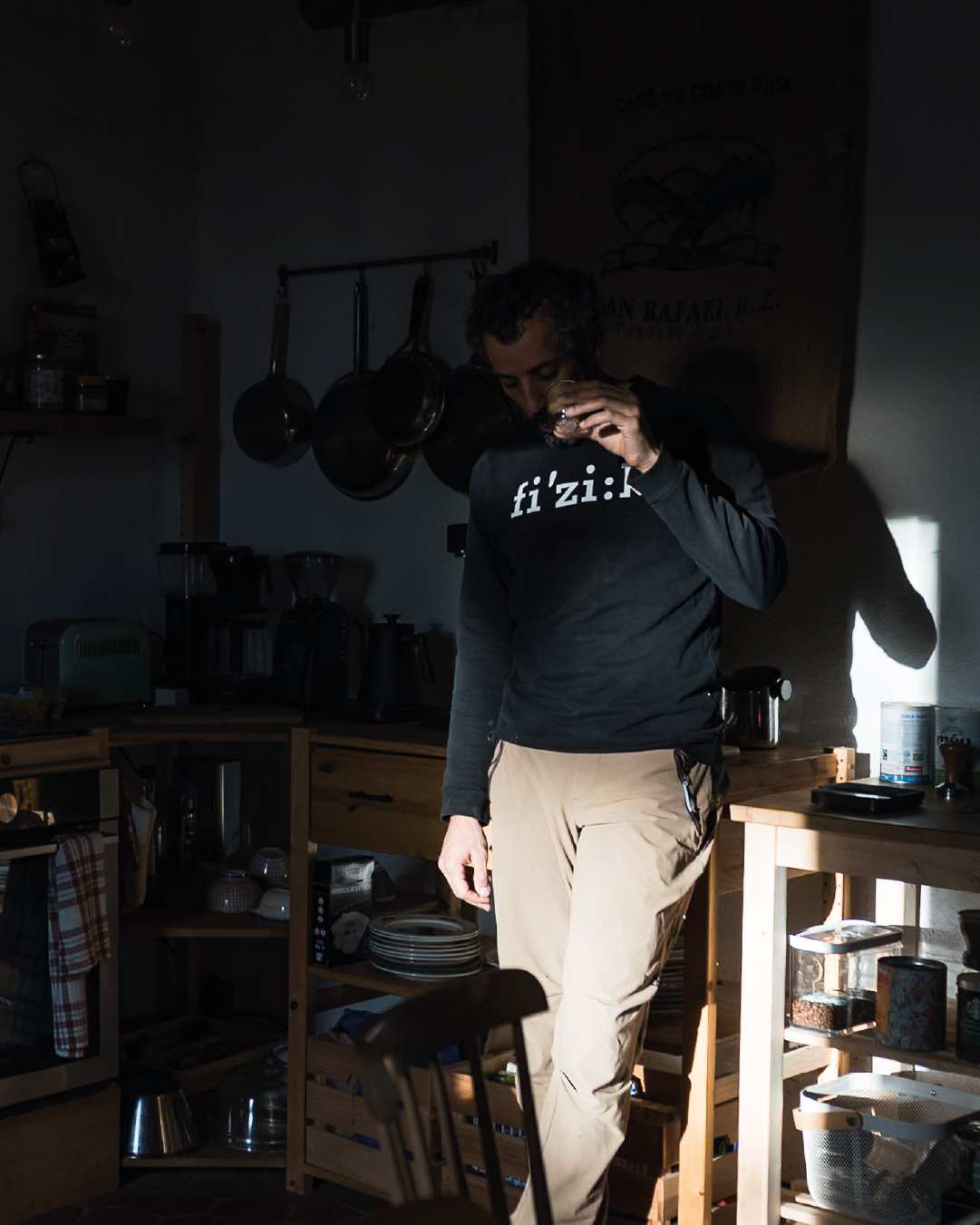
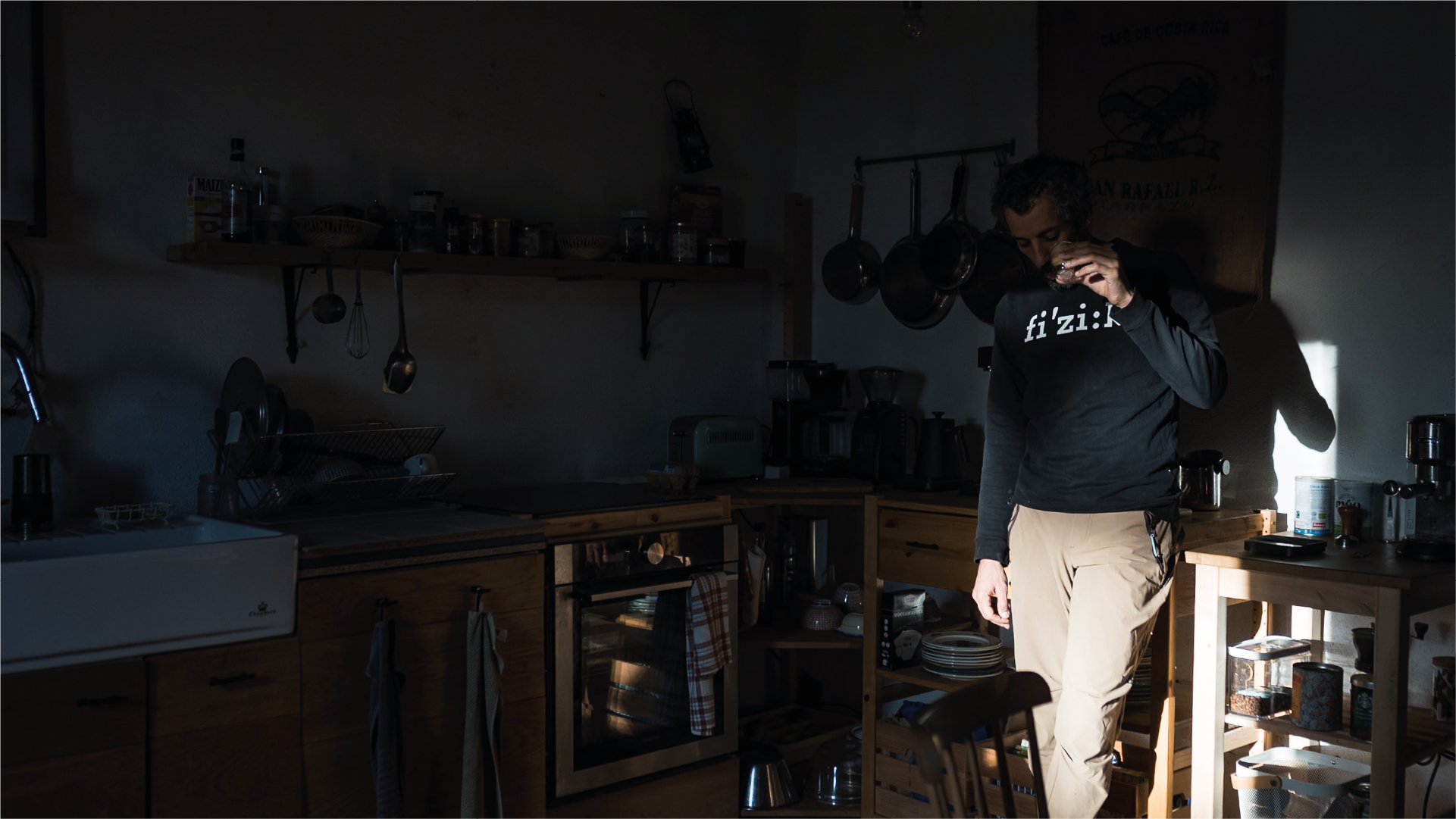
French ultra-distance athlete Sofiane Sehili has earned many accolades in his adventurous career: winner of the Inca Divide, the Atlas Mountain Race, and the Tour Divide, to name a few—not to mention his title as back-to-back-to-back Silk Road Mountain Race champion. When he’s not competing head-to-head, he’s usually riding solo in pursuit of a new world record.
This past July, Sofiane set out on one of his most ambitious attempts to date: a fastest known crossing of the Eurasian continent by bike. On track to break the record and just 200 kilometers from his final destination of Vladivostok, Russia, however, Sofiane was stopped at the China-Russia border, told the only way to cross was by train the following day, putting him just outside of record contention. So, Sofiane did what he always does when presented with an obstacle: find another way around—a fateful decision that would ultimately lead to his arrest and imprisonment.
To learn more, we sat down with Sofiane to chat about his world-record attempt, his time spent in a Russian prison, and the impact it’s had on his approach to adventure.
- fizik Take us back before your ride began. How did you plan the best route across two continents?
- SS The whole planning of this record attempt was quite chaotic. I initially intended to ride through Turkey, then Iran, then Pakistan to enter China. But a few weeks before my start, Israel started bombing Iran, so I had to change my route. I looked at different possibilities, maybe through Belarus and Russia. But all the borders between Europe and Belarus and Russia are closed. So, I took the only road that was safe at the time. I chose to ride north of the Caspian Sea, through the Caucasus, Georgia, Russia, and then Kazakhstan. And I had to get a visa for Russia at the last minute, which was a bit complicated.
- fizik Considering that you’ve been around the world a few times by bike, were any of these areas already familiar to you?
- SS It was in ways similar to what I did in 2017, on my second solo bike trip. There are not many roads to choose from when you want to ride across Central Asia, so it was fairly similar. I was pretty much riding a diagonal across China, and this time I wanted to see some new countries. I could have made things easier by just staying in China, but I really wanted to go to Mongolia, so I went there, and then back to China.
- fizik Were there any areas that stood out as particularly special?
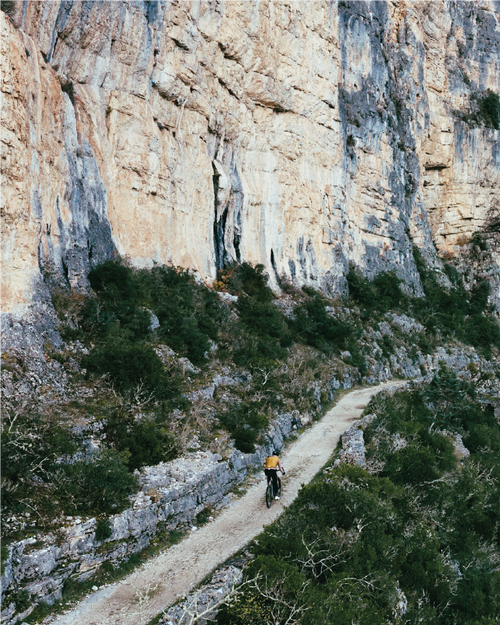
- SS I did love Mongolia—well, at least the first half, from the Chinese border to Ulaanbaatar. It was so quiet, huge distances without anything, and pretty scenic—the kind of place that I love. I'd love to go back. I also really enjoyed going back to the Pamir in Tajikistan. It's one of the most beautiful places in the world, as far as I'm concerned—and as far as a lot of bike tours are concerned. And even though I had already been there, it was still so incredible.And I rode through Kyrgyzstan again. I know the country really well since I've been there four times. But I did discover one new road that has been freshly paved. This road is waiting for some tunnels to be finished to be a link between major places, but at the moment it's really, really quiet. And it's spectacular.
- fizik What was the biggest challenge you faced during your actual journey?
- SS The challenges, of course, were the border crossings. They can sometimes be very complicated, especially in China. Oftentimes, the Chinese don't want you to ride to the border checkpoint. I could ride to the Tajik checkpoint, but then there was a no-man's land between the Tajik checkpoint and the Chinese checkpoint. And when that's the case, when there's a no-man's land, the Chinese don't want you to ride bikes there. I ended up losing a lot of time because of that.
And then, of course, there was the infamous final border crossing…
- SS So, the Russian border crossing—I arrived at the first checkpoint that I had targeted, a Chinese town called Dongning, Poltavka on the Russian side. I was notified by the Chinese military that it was only for Russians and Chinese people. I couldn't cross there. I had to try and cross in Suifenhe to Pogornichny, 60 kilometers further north. The problem was that by the time I reached the other checkpoint, it was past closing time. I lost about half a day waiting for that checkpoint to open the next morning. And then I found out that I was not allowed to cross on a bike or on a bus with the type of visa that I had, which was an electronic visa.
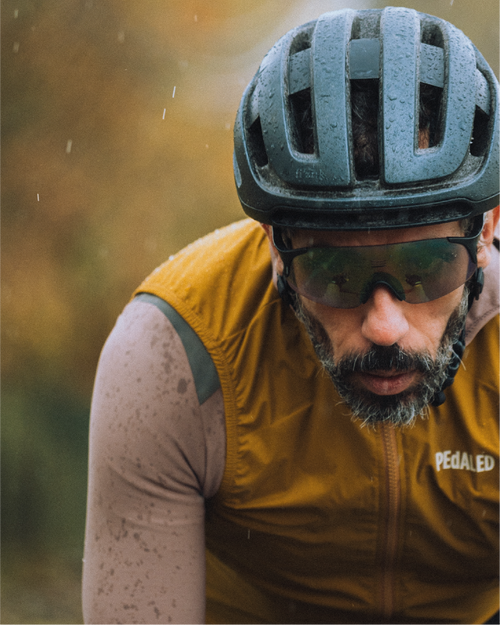
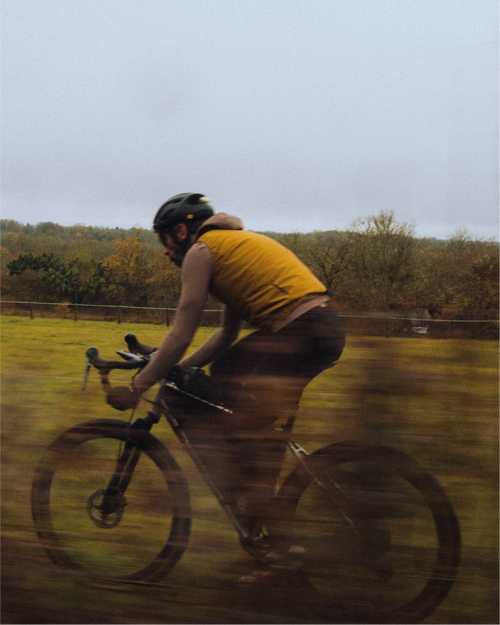
"...So, after hesitating for a couple of hours on a plan of action, I decided to look for a way to cross to Russia, not through the checkpoint."
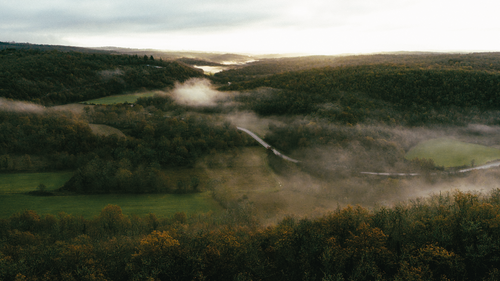
- fizik And after crossing into Russia, you presented yourself at the next checkpoint—and you were arrested. What was it like to have the total freedom you’re used to experiencing taken away?
- SS Being in prison was very hard for me. The first few days of my detention were really, really hard, mentally. But then, after maybe a week or so, I think the mental strength and the resilience that I’ve built through years of ultra-cycling kicked in, and that's what helped me. I was like, OK, you've been here about a week. All you've been doing is staying in your bed and being depressed. You're going to be here for at least a month; maybe you're going to be here for two. So, you can't do that. You need to do something—take back control of your life. I found the strength to get over it—to not just be this miserable person spending all of his time in bed, complaining and wondering when it's going to end. I had to be strong.
- fizik What did you miss the most while you were in detention?
- SS There were a lot of things that I missed. A lot. Sleeping through the night without any visits waking me up; not seeing bars every time I would look out of a window—you can look through the window, but the bars are always there. Having a nice meal. You miss so many things in prison.But the thing that I missed the most was just being outside. It wasn't even cycling. If I had had a choice between riding a bike in a velodrome or just walking in a park, without a single second of hesitation, I would have gone for the park. Just trees, grass, the sky, and the sun.
- fizik When did you first start to sense that you were going to be released?
- SS I think the moment that I kind of understood that everything was going to be okay was when the investigation was finished and the investigators gave me their report. I gathered from what they said in Russian that things were going to be okay, because I had an interpreter, but she was not very good. So, I couldn't ask a lot of questions and understand stuff completely. There was also this thing where I was always afraid of asking questions because I was afraid of the answers. But I was able to gather some information because I had started picking up a little bit of Russian. When the investigator was talking, I kind of gathered that he was talking about money and about a fine. And that my sentence was probably going to be a fine.
- fizik How has this experience changed your approach to adventure?
- SS I'm not sure that it’s changed my perspective on adventure. If it did, it made me a bit tougher, I hope. It's still too early to tell.
- fizik Would you say it’s changed your perspective on life?
- SS I think in a way it has. Maybe just like when people survive cancer and then they're like, wow, life is precious and can end at any point. I didn't feel like my life was about to end, but I did at some points worry that the Russian justice system was going to steal two years of my life.And two years is a long time. I was very worried about that. It's only been about six weeks since I’ve been back, but so far, I do feel that I maybe have a better understanding of how all these moments of freedom are precious.
- fizik Any plans for a new adventure next year?
- SS I'm not really planning stuff at the moment. Even though I don't really dwell on these 50 days spent in jail, I’m probably still in a transition phase. I'm just processing—in the back of my head, not consciously—but I'd much rather look at what's going to happen next week than what's going to happen in several months. When I was in prison, I was just thinking about tomorrow, the next day. That's as far as I was trying to look ahead. So now it's kind of hard to flip a switch and to look at what's going to happen in several months.
Along with the rest of the collective cycling community, we’re glad that Sofiane is once again home safe and sound.
You can follow along on his next adventure—whatever, whenever, and wherever that may be—on Instagram: @sofianeshl.
Thanks, Sofiane, for sharing your story with us.


